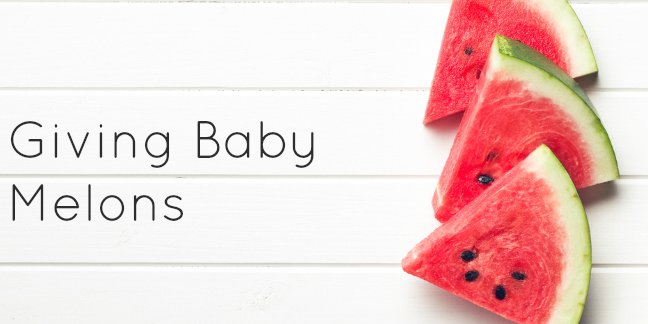
Image: Shutterstock
The Goodness of Cantaloupe and Melons for Baby
Cantaloupe, Watermelon and other melons are high Vitamin A, Vitamin C and even Calcium.
The cantaloupe has an amazing concentration of beta-carotene making it a must have for healthy vision and eye development. Just 1 cup contains approximately 100 % of the USRDA for Vitamin A. Melons are a healthy and nutritious fruit option for your little one. Soothing and watery, full of beta carotene, melons are sure to be one of baby’s favorite foods.
When Can I Introduce Cantaloupe, Watermelon and Melons to my Baby?

Cantaloupe and Melons may be introduced to baby from 8 months of age though some introduce it as early as 6 months of age. Please be aware that some babies may experience rashes from melons of all types. If your baby has a rash that maybe traced to melon, this is most likely due to the melon’s “acidity” and not to an allergy. As always, we encourage you to consult your pediatrician about introducing foods to your baby; generalities may not apply to all infants.
Melons (1 cup pureed raw)
| VITAMINS:
Vitamin A – 5276 IU
|
MINERALS:
Potassium – 417 mg |
How to select Melons like Cantaloupe for yummy baby food recipes
 Hooray! According to the EWG, melons are not one of the “dirty dozen” foods that are most highly contaminated with pesticides – in fact, cantaloupe is one of the “clean 15” fruits and veggies that are least contaminated with pesticides; purchasing organic melons is a personal choice.
When selecting any type of melon, you want to give the melon a good thump with your fingers. Choose a melon that sounds a bit hollow and that has a fresh “melony” scent to it. Inspect the melon for cuts, bruises and sagging depressions that may indicate rotting or over-ripeness.
How to store Cantaloupes or Melons for baby food
Cantaloupes and Honeydew Melons should be stored in the refrigerator even if they have not been cut open.
Watermelons should be stored somewhere dry and at room temperature until you have cut them. Once cut, either store in an airtight plastic container or wrap plastic wrap over the side that has been cut. Always store cut watermelon in the refrigerator.
You may leave all types of melons out on the counter to ripen if need be.
Healthy Cantaloupe & Melon Baby Food Recipes
Cantaloupe & Melon Puree 
Ingredients:
- 1 medium sized ripe melon of your choice
Directions:
Step 1: Cut melon in half and scoop out seeds
Step 2: Remove the rind from 1 half of the melon and then dice
Step 3: I suggest mashing or serving soft ripe dices as finger foods. Melons really do not store well in pureed form.
Step 4: If you decide to puree the melon for baby food, simply place the dices into your choice of appliance for pureeing and begin pureeing.
Step 5: There should be no need to add any extra liquid but you may need to add cereal or another food to thicken up the melon.
Step 6: Note: Freezing in dices will make for less waste and enable you to pop out a few dices for a soothing cool treat in a baby safe feeder.
Melon Salad
Ingredients:
- 1/2 cup cubed melon
- 1/2 banana, peeled and diced
- 1 peeled, pitted and diced peach
Directions:
Step 1: Combine all fruits, give a gentle mashing if needed and serve as a finger food
Step 2: If you decide to puree, simply place the fruits into your choice of appliance for pureeing and puree as needed. There should be no need to add liquid
Step 3: Add cereal (if desired) to thicken up
Creamy Melon Salad – Mix in some yogurt to make a creamy melon salad that baby can pick through to exercise that pincher grasp!
Melon-Mole’
Ingredients:
- 1/2 cup cubed melon
- 1/2 peeled, pitted and diced avocado
- pinch of mint or cilantro
Directions:
Step 1: Combine the melon, avocado and herbs then mash or puree to a creamy texture
Foods Good to Mix With Cantaloupe, Watermelon & Other Melons
- Bananas
- Avocado
- Blueberries
- Peaches
- Carrots
- Summer Squash – Zucchini, Yellow (Crooked Neck)
- Chicken
- Yogurt
 Remember, always consult with your pediatrician regarding introducing solid foods to your baby and specifically discuss any foods that may pose allergy risks for your baby.
 This site complies with the HONcode standard for trustworthy health information: verify here.
ORAL ALLERGY SYNDROME
The food on this page may be one involving OAS. OAS occurs when a person sensitive/allergic to pollen develops a reaction to fruits/veggies that have a similar type of pollen. Itching & swelling of the lips, the mouth and/or throat are typical symptoms. These symptoms normally appear within minutes of eating the offending food and may be worse during the spring and fall pollen seasons. Rarely is an OAS life threatening. Click below to learn more.
Birch Pollen Allergies
Birch pollen allergies are associated with apple, carrot, cherry, pear, peach, plum, fennel, walnut, potato, spinach, buckwheat, peanut, honey, celery, and kiwifruit.
Cedar Allergies
Japanese cedar allergies are associated with melon, apple, peach and kiwifruit.
Mugwort Allergies
Mugwort allergies are associated with celery, carrot, spices, melon, watermelon, apple, hazelnut, and chestnut.
Grass Pollen
Grass pollen allergies are associated with melon, tomato, watermelon, orange, rice and cherry.
Ragweed Pollen
Ragweed allergies are associated with melon, chamomile, honey, banana, and sunflower seeds.
Latex
Latex allergies may be cross-reactive to banana, avocado, kiwi and papaya.
Can Cantaloupes or Melons be frozen for baby food?
Cantaloupes and other Melons should not be pureed and then frozen. Freezing a melon puree will give you a thawed product that is gritty and not very tasty at all. You can however freeze melons in large dices. There will be minimal change in texture and taste when melons are frozen in dices.